

Japan has roughly 3.36 million small and medium-sized enterprises. They account for 99.7% of companies and 69.7% of employment. That is the visible number. The invisible number is harder to see: how many of those businesses have customers, employees, permits, local trust, and no obvious next owner?
That is where the Takaichi effect starts.
Not in a Tokyo press conference. Not in the Nikkei chart. Not in another headline about the yen.
It starts at 7:40 p.m. in a regional factory office, when the founder is still answering customer calls because there is no one else who can. It starts in a hot-spring town where inbound demand is back, but the inn cannot add rooms because cleaning, hiring, and booking operations are still manual. It starts at a freight company that has routes, customers, and decades of trust — but not enough drivers, dispatchers, or management capacity to keep growing.
Demand exists. Capacity does not.
For foreign investors, that is not only a demographic story. It is a deal-flow story.
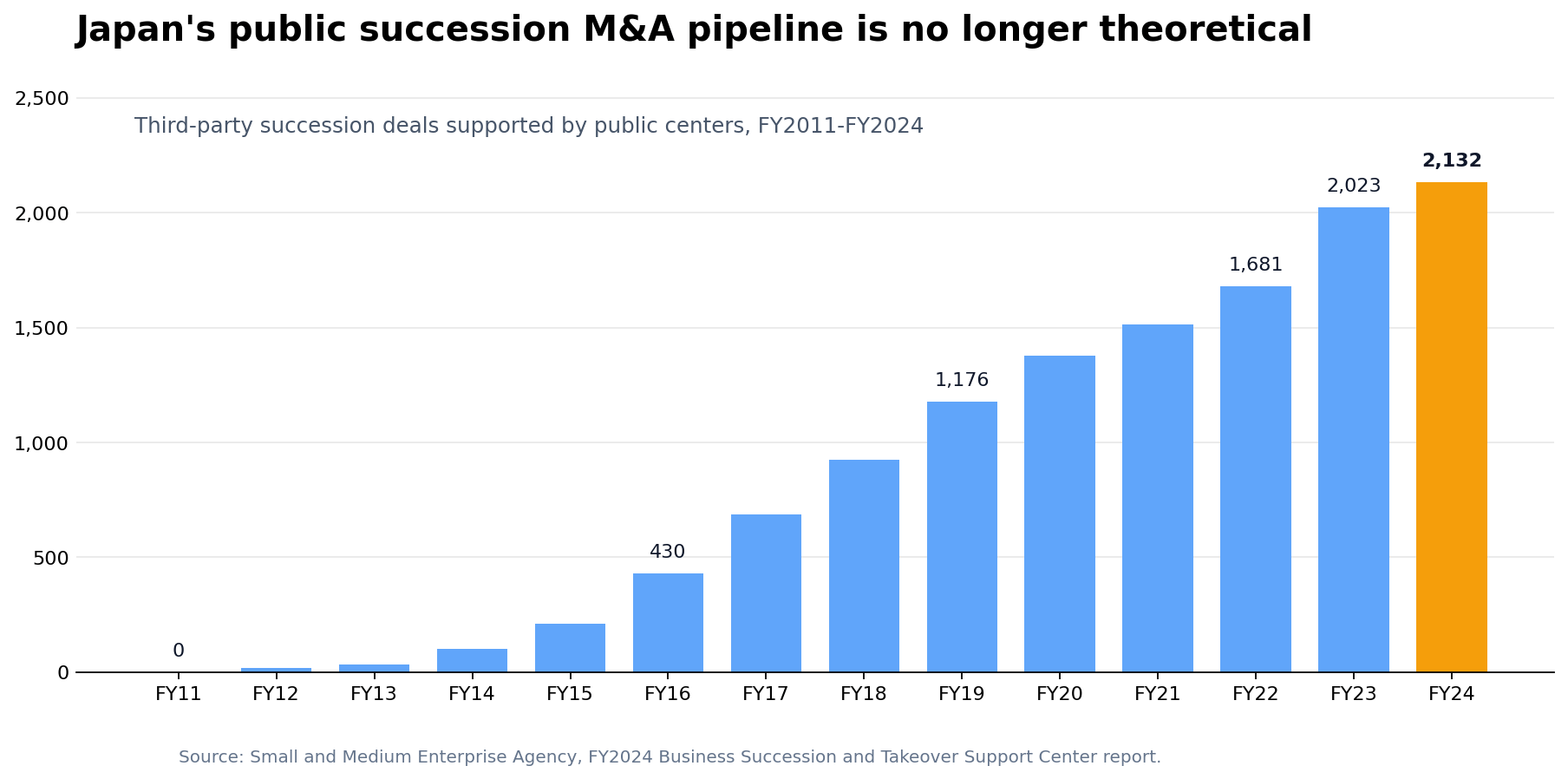
Figure 1: Third-party succession support deals rose from essentially zero in FY2011 to 2,132 in FY2024.
The surface story: Sanaenomics, defense, the yen
Most English-language coverage of Prime Minister Sanae Takaichi focuses on the obvious political variables: fiscal policy, defense, China risk, the yen, nuclear energy, and the proposed Japan-style CFIUS framework. Those are real. They matter. “Sanaenomics” — the press shorthand for her economic program, echoing Abenomics — usually gets read through those same lenses.
But the more investable read is quieter.
In her February 2026 policy speech, Takaichi framed growth around public-private investment, stronger supply capacity, asset management, corporate governance, economic security, regional economies, and SME earning power. In the same speech, she explicitly tied SME policy to productivity, labor-saving, price pass-through, fair transactions, and an environment that facilitates business succession and M&A.
That combination is important.
Japan is not merely saying, “Please invest in Japan.” It is saying, “Help us raise productivity in the operating layer of Japan.”
That operating layer is not the startup ecosystem. It is the 30-person manufacturer. The 12-person logistics company. The local tourism operator. The food processor. The regional maintenance contractor. The B2B service business whose website looks outdated but whose customer relationships are irreplaceable.
The inside truth: this is not a startup policy. It is a continuity policy.
The mistake foreign investors make is to read Japan through two familiar lenses: public equities or venture capital.
But much of the 2026 opportunity sits in a third category: continuity capital.
Continuity capital is not capital for a dream. It is capital for a business that already works, but cannot continue in its current form. The reason may be succession. Or labor shortage. Or weak back-office systems. Or a founder who built trust over 35 years but never built a management team.
This is why SME M&A is becoming more than a private transaction. It is becoming a policy tool.
Japan’s Business Succession and Takeover Support Centers recorded 23,540 consultation users in FY2024, with 2,132 third-party succession deals, the highest in the program’s history. Many of these are small companies: the official report says more than 60% of seller companies were at or below 100 million yen in sales, and more than 90% were at or below 500 million yen.
That is too small for most global PE funds. It is too operationally messy for tourists with capital. But for a serious foreign buyer with an operator model, it is exactly where the market becomes interesting.
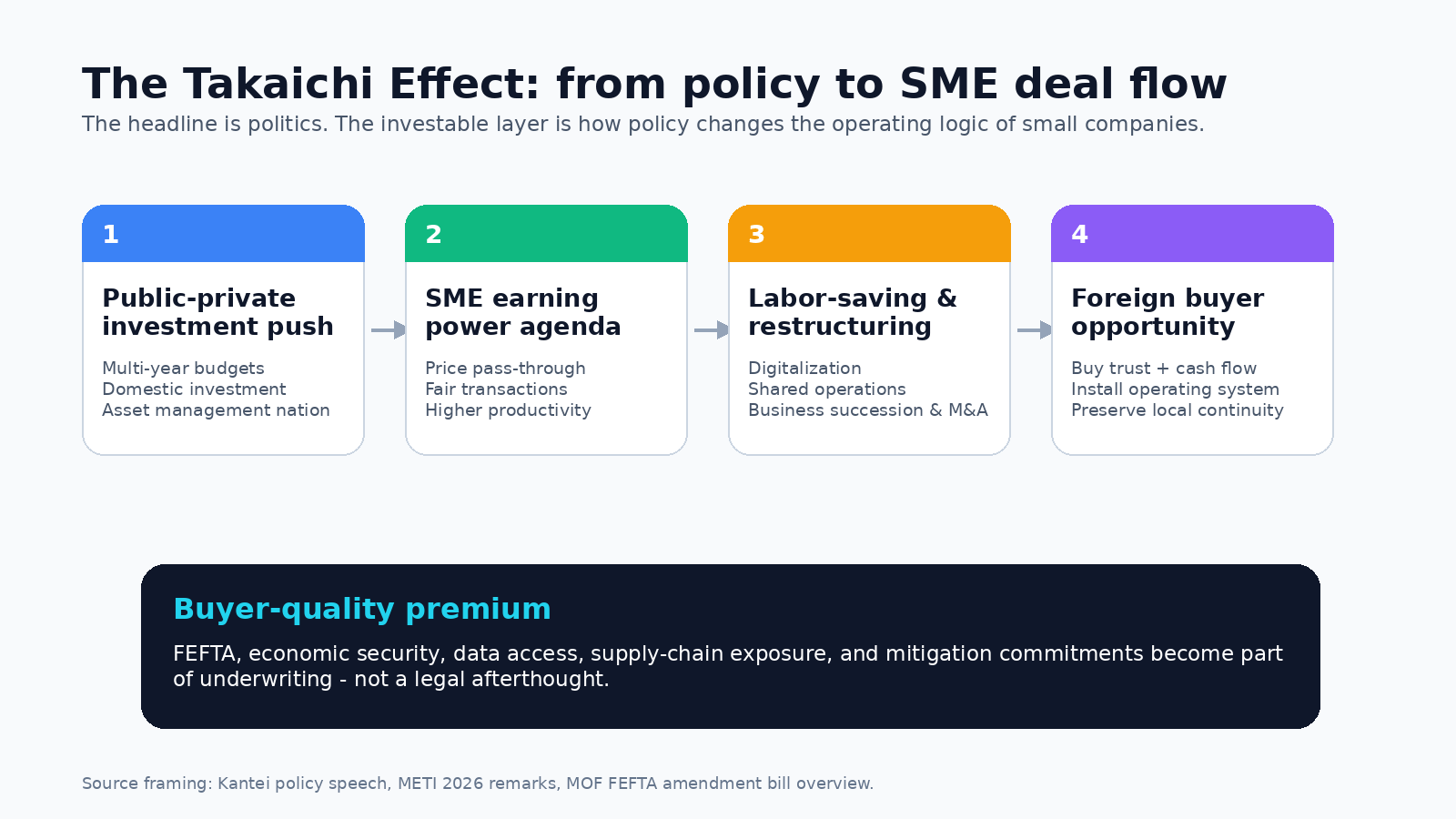
Figure 2: The policy signal is not just stimulus. It is the conversion of SME constraints into consolidation logic.
Three structural forces are creating the playbook
1. Succession is becoming a public-policy deal source
Japan’s succession problem is not new. What is new is the normalization of M&A as a solution.
For decades, the default answer was family succession. The son takes over. The daughter marries into the business. A senior employee becomes president. That system still exists, but it no longer clears the market.
The state, local banks, chambers of commerce, prefectural support centers, and private intermediaries are now part of a growing origination network. That changes the psychology of the seller. M&A is no longer a last resort. It is increasingly a legitimate form of business preservation.
For foreign investors, this means the best deals often will not look like auctions. They will look like trust-transfer processes.
The seller may care about price. But the seller may care more about employees, suppliers, the company name, the local bank, and whether the buyer will embarrass the founder after closing.
2. Labor shortage turns subscale companies into consolidation candidates
A labor shortage does not only reduce growth. It changes the minimum efficient scale of a company.
A small inn, logistics operator, repair business, or food processor may have enough demand. What it lacks is the management capacity to recruit, train, schedule, digitize, and comply. In that world, M&A is not simply financial engineering. It is operating-system installation.
The acquirer can create value through shared accounting, shared recruiting, common procurement, route optimization, booking automation, AI-assisted customer service, joint warehousing, centralized compliance, and management training.
The core question is not, “Can we cut costs?” The better question is: “Can we make the same local trust serve more demand with fewer bottlenecks?”
That is the difference between buying a cheap company and buying an under-operated company.
3. Regulation creates a buyer-quality premium
The Takaichi administration is also tightening the national-security lens. The March 2026 FEFTA amendment bill would expand scrutiny of certain indirect acquisitions, formalize risk mitigation measures, address nominee or circumvention structures, create post-investment intervention powers in certain cases, and strengthen interagency review.
This does not mean Japan is closing.
It means Japan is becoming more explicit about the type of foreign ownership it wants. The government has raised its inward FDI ambition to 120 trillion yen by 2030, and JETRO reports that inward FDI stock reached a record 53.3 trillion yen at the end of 2024.
So the message is not anti-foreign capital. The message is pro-trustworthy capital.
The buyer who understands governance, sector sensitivity, data access, supply-chain exposure, and mitigation commitments will have an advantage. In 2026, regulatory trust becomes part of purchase price.
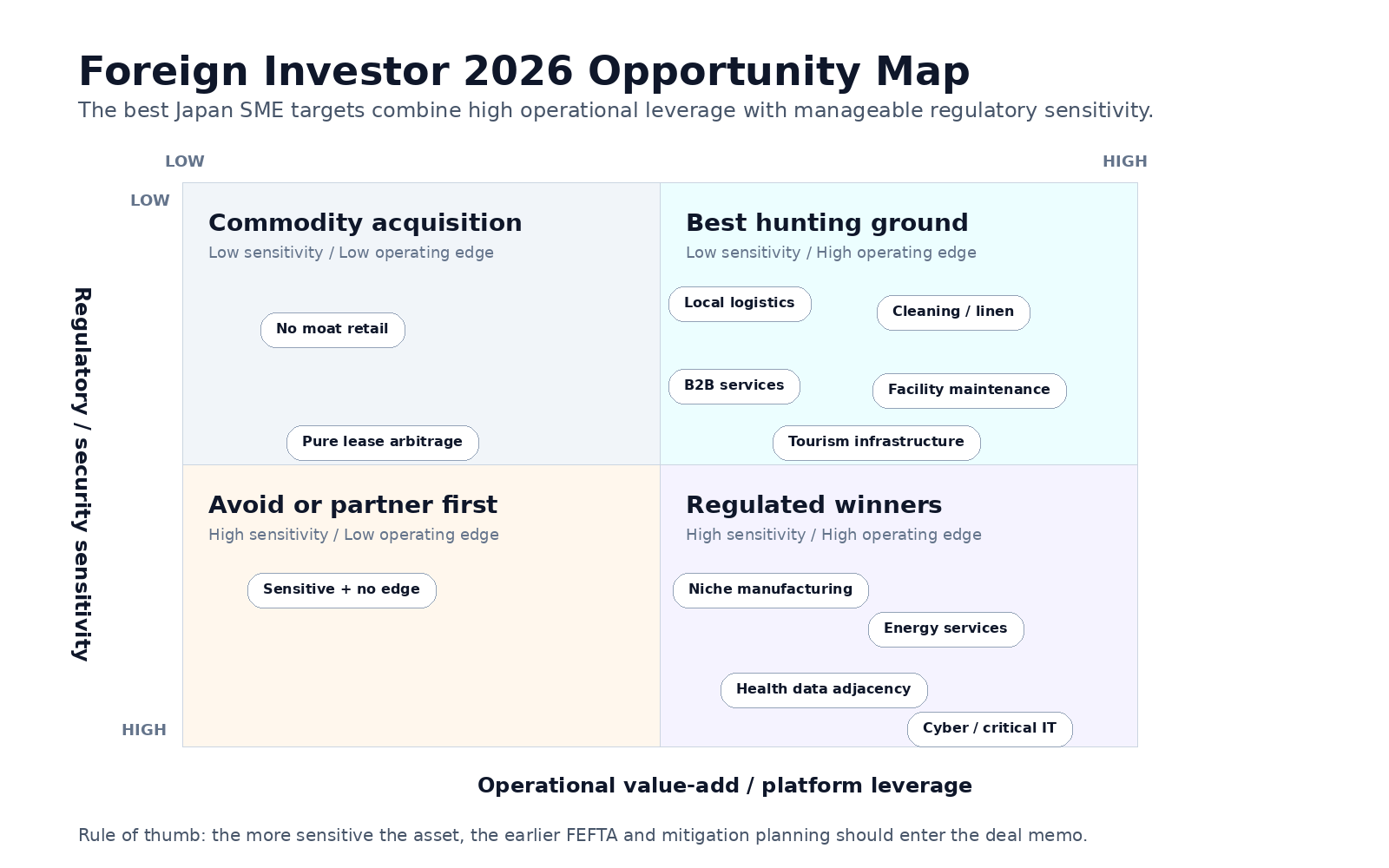
Figure 3: In 2026, the best opportunities combine operational leverage with a manageable regulatory profile.
Where foreign buyers should hunt
The best targets are not always the famous brands. They are the boring chokepoints.
Look for businesses where demand is visible, replacement is hard, and operations are under-scaled: local logistics, industrial maintenance, facility services, specialty food processing, tourism infrastructure, medical back-office services, niche manufacturing suppliers, cleaning and linen, elderly-care adjacency, and regional B2B services.
These companies often have three assets that do not appear cleanly in a CIM:
First, local permission. Customers answer the phone because they know the owner.
Second, tacit workflows. The business runs on knowledge that is in someone’s head, not in software.
Third, a bottleneck that a larger operating platform can fix: recruiting, scheduling, procurement, compliance, route density, digital booking, or management succession.
The trap is buying only the P&L. The real acquisition is a social system.
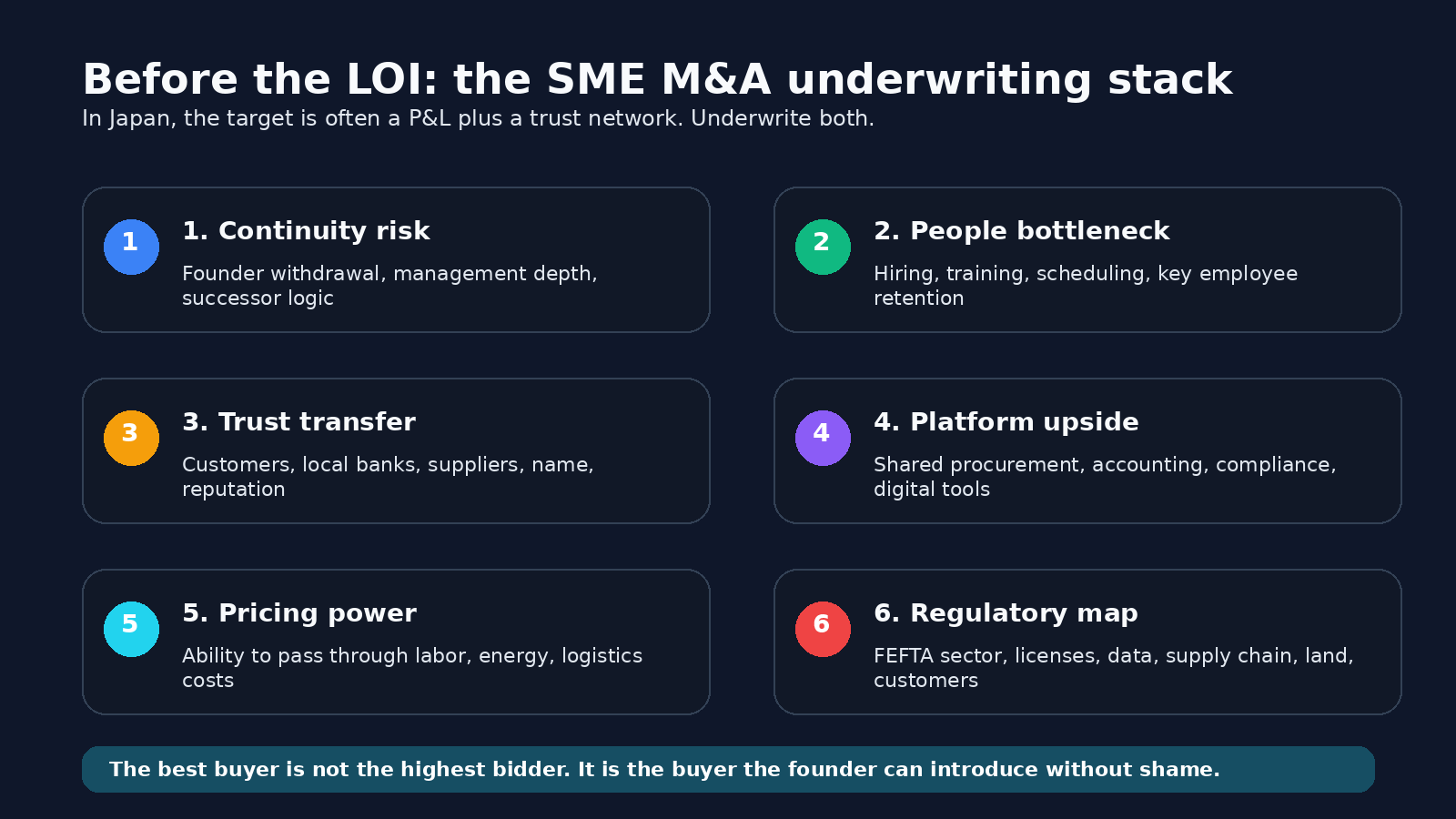
Figure 4: The target is a P&L plus a trust network. Underwrite both.
The 2026 foreign-investor playbook
The practical playbook is simple, but not easy.
Do not start with “Japan market entry.” Start with “whose operating capacity can we expand?”
Do not start with branding. Start with employee retention, customer concentration, owner transition, and bank relationships.
Do not start with financial engineering. Start with the headquarters functions the target never had: hiring, systems, compliance, procurement, analytics, pricing, training, and post-merger integration.
Do not wait until signing to think about FEFTA. Map the target’s business lines, data, customers, supply-chain role, licenses, and indirect ownership issues before the LOI.
And above all, do not assume that a retiring Japanese owner is selling a commodity. In many cases, the owner is selling reputation. Reputation requires a buyer who can be introduced without shame.
A short viewing list before your investment committee memo
• Prime Minister Takaichi’s policy speech coverage:
• JETRO Expert Perspectives on why Japan is attractive to global investors: https://www.jetro.go.jp/en/invest/insights/expert-perspectives/m-and-g.html
• “Japan’s M&A wave is just getting started”:
The conclusion: Japan entry is becoming an ownership problem
The Takaichi effect is not one policy. It is a shift in the way Japan is framing continuity.
Japan still needs startups. But it also needs owners. It needs operators who can keep cash-flowing companies alive, raise wages, install systems, and preserve regional capability. It needs capital that can buy without hollowing out.
For foreign investors, this is the opportunity.
The best Japan entry strategy in 2026 may not be hiring a country manager, renting a WeWork in Tokyo, and spending two years trying to create trust from zero.
It may be buying the company that already has the customers, the licenses, the employees, the routes, the local bank relationship, and the founder who needs a successor.
Japan does not only need more builders.
It needs better buyers.
Which layer of Japan’s SME economy looks most mispriced to you in 2026: succession, labor-saving, local brands, or regulated industrial supply chains?
Note: This article is for informational purposes only and is not legal, tax, or investment advice.
———
I write about cross-border business opportunities in Japan. If you’re interested in exploring M&A deals — restaurants, hotels, IT companies, and more — we aggregate 3,500+ listings from Japan’s top platforms at app.redelta-ma.com